
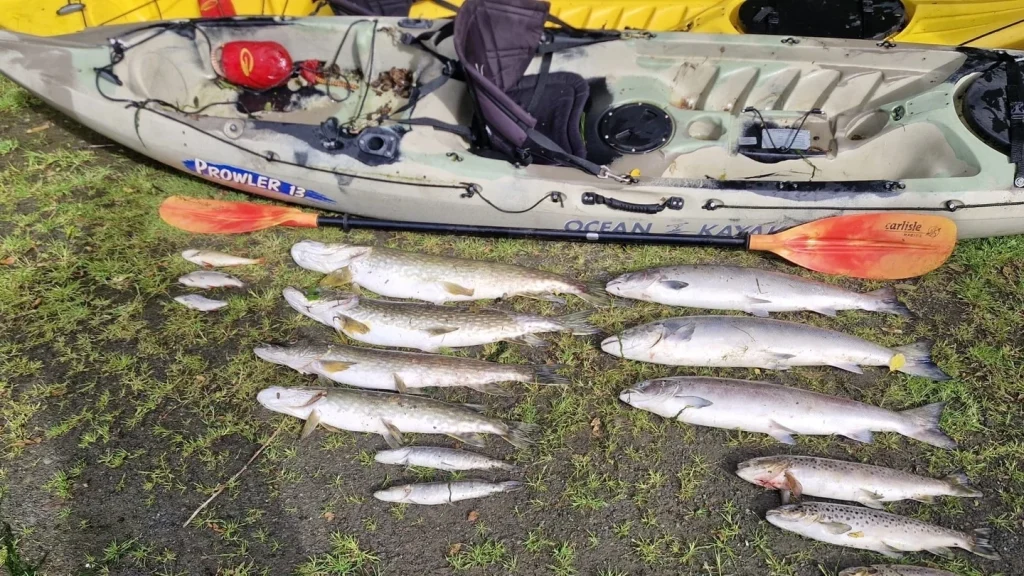
The Slaney River Trust is deeply concerned by reports of the devastating fish kill on the River Glyde, where more than 20,000 fish are believed to have died following a major pollution incident.
Atlantic salmon, brown trout, eels, pike and many other species have been affected, making this one of the most serious fish kill events recorded in Ireland in recent decades. The River Glyde is an important salmonid river within the Dundalk Bay catchment, and the loss of so many fish will have long-lasting ecological consequences. Previous assessments have identified parts of the Glyde catchment as being under pressure from nutrient pollution, sedimentation and declining water quality, with significant challenges linked to agriculture and urban runoff.
The recent Glyde fish kill follows a major fish kill on the Munster Blackwater in 2025 which resulted in an estimated 42,000 fish deaths. These tragedies highlight wider concerns about the health of Ireland’s rivers serve as a stark reminder of the vulnerability of our freshwater ecosystems.
The Environmental Protection Agency (EPA) reports that 48% of monitored rivers in Ireland now fail to meet the Water Framework Directive (WFD) requirements for “good” or “high” ecological status. Significant portions of the Slaney River system are currently designated as ‘Unsatisfactory’, with excessive nutrient and sediment levels associated with agriculture and urban runoff.
The Slaney River Trust supports a full and transparent investigation into the Glyde fish kill and calls for continued investment in river restoration, water quality monitoring and stronger protection measures to prevent similar events in the future. The recovery of the River Glyde will require long-term commitment, but it must also act as a catalyst for stronger action to protect Ireland’s rivers.
Local communities, anglers, landowners and river users all have a role to play in safeguarding water quality and reporting pollution risks when they arise.
For an active pollution incident, please contact the National Environmental Complaints Line (NECL) on 1800 365 123 and Inland Fisheries Ireland on 0818 34 74 24.
Please also send a report of any pollution or poaching witnessed in the Slaney Catchment to reportslaneypoaching@gmail.com